

Shadow Work: The Psychological Journey to Finding Your True Self

Have you ever felt like you weren’t alone—even in your own thoughts?
Has it ever felt like there was something sinister lurking over your shoulder, or in the back of your mind, following you into moments of decision and influencing you without your knowing?
This unseen force that functions in the periphery of your identity lashes out in moments of anger, fear, jealousy, and shame, making you act out of character. But what if this figure following you is a part of your character?
And what if, by seeking to understand this dark side, rather than fleeing from it, you could unlock a level of self-awareness and transformation beyond anything you’ve ever imagined?
Carl Jung: The Psychology Pioneer Who Saw Directly Into the Soul
Carl Gustav Jung, the psychology pioneer credited with the topic of this discussion, was born in 1875.
His father was a rural pastor, who Jung observed as kind but too accepting of religious dogma. His paternal grandfather, for whom Jung was named, was rumored to be the son of German literary figure and scientist Goethe.
His mother and maternal grandfather claimed to converse with the spirits of the dead, the latter dedicating his life to learning Hebrew because he believed it was the language spoken in heaven.
As a child, Jung believed he had two personas, a schoolboy and an authority from the past. He once carved a figure into a wooden ruler and kept it in his attic, bringing it writings in a secret language he’d created. Jung’s inherited eccentricities and curiosity about the mind led him to the field of psychology.
Once a colleague of Sigmund Freud, he would split from his mentor to forge his own identity and his own branch of psychology. Much of it was influenced by a dream Jung had, where he was holding a small bit of light in his hands, as he fled through a mist from a shadow being behind him.
Jung concluded that the light symbolized his conscious mind. The darkness he was fleeing from, and only able to see thanks to the light, would be symbolic of his greatest contribution to the field of psychology.
Origins of the Shadow in Psychological Theory
Jung introduced the idea of the shadow as part of his broader theory of the unconscious. Jung believed that every individual has a conscious identity, the face we show to the world, and an unconscious counterpart—the shadow.
This shadow contains the parts of ourselves that we reject or deny, often out of shame, fear, or societal conditioning. These traits are typically those we deem undesirable or unworthy, yet they form an essential part of who we truly are.
Jung’s insights were born from both his personal experiences and his extensive study of mythology, religion, and culture. Through his work, he noticed that many people felt fragmented, as if they were divided between their public selves and a hidden, unspoken side that was often left untapped.
He theorized that in order to experience psychological wholeness, an individual must confront the shadow, bringing the unconscious into the light of awareness. This process is known as shadow work.
Why Shadow Work is Valuable and Even Necessary
While the shadow is by definition a part of the self that the individual denies and represses, this doesn’t mean it doesn’t exist.
Even unacknowledged, the shadow remains a part of the psyche and continues to manifest itself through unconscious biases, reactive emotional patterns, and even self-sabotage. These unseen propensities that come from within can trap people in cycles, leaving them wondering why the same pattern repeats constantly in their lives.
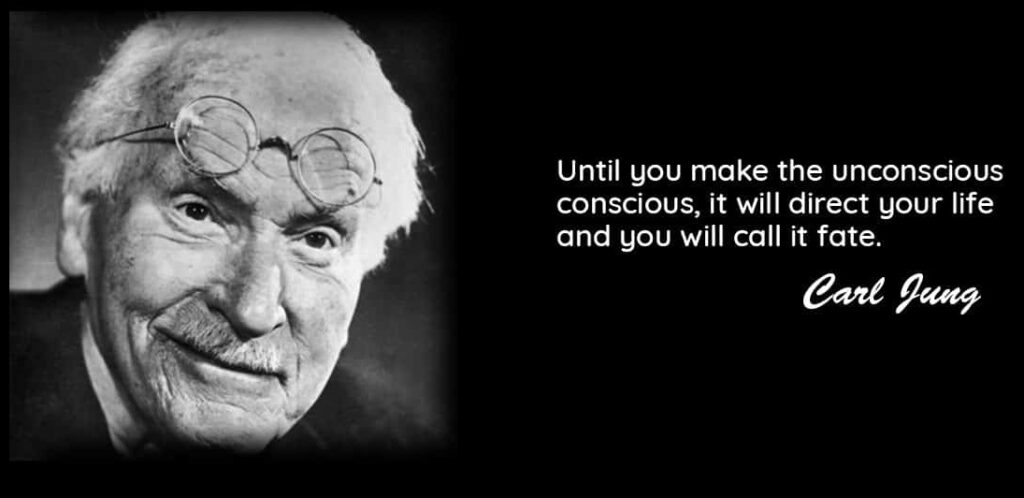
Jung believed that without acknowledging the shadow, individuals would continue to be unconsciously influenced by it, projecting its energy outward and distorting relationships with themselves and others.
Conversely, Jung believed that by engaging in shadow work—exploring the origins of our repressed qualities and the reasons we hide them—we could gain a deeper understanding of ourselves. In doing so, we reclaim the ability to consciously shape our reactions, thoughts, and ultimately, our character.
How Do We Discover Our Shadow?
If the main benefit of shadow work is greater self-awareness and the capacity for self-direction, how do we embark on this journey?
If the shadow represents a psychological blind spot—something we refuse to acknowledge—how do we begin to uncover it?
Simply put, the key to shadow work is self-reflection. But this process is not for the faint of heart. Many people bury their shadow due to past trauma, societal conditioning, or deep-seated fears, often rooted in childhood. Confronting these hidden aspects of the self can be emotionally intense, yet the rewards are profound: greater self-awareness, emotional freedom, and the ability to consciously shape our thoughts, reactions, and character.
Here are a few powerful methods to begin this journey:
- Journaling – Writing offers a direct window into the mind. By recording your thoughts, emotions, and routines each day, you may start to recognize hidden patterns in your psyche. Look for moments of discomfort or resistance in your writing—these can be clues to aspects of your shadow.
- Meditation – Meditation teaches you to observe your thoughts without judgment, allowing the unconscious to surface in a safe, controlled way. Meditation’s calming nature makes it an ideal practice for navigating the emotionally intense process of shadow exploration.
- Dream Analysis – Since the conscious mind rejects the shadow, the shadow can sometimes speak to us during sleep, when the conscious mind is resting. Dreams can contain powerful symbolism, which can be interpreted as messages from the deeper recesses of the brain.
- Counseling – If you seek guidance, look for a therapist familiar with Jungian psychology or shadow work. They can help you identify deep-seated patterns, process difficult emotions, and understand your shadow in a healthy, constructive way.
Shadow work is not about erasing the parts of yourself you fear or dislike—it’s about seeing them clearly, understanding their origins, and using this knowledge to improve your life.
The Phenomenon of Projection: Seeing the Shadow in Others
While not the only psychologist to pioneer the concept of projection, Jung expanded on this fascinating phenomenon in great detail.
Why is it that some people, or some specific behaviors they demonstrate, just seem to trigger us? Some people find themselves deeply unsettled by certain traits in others, even when those traits are neither harmful nor overtly negative. This disproportionate reaction often reveals more about the observer than the observed.
According to Jung, it’s because these traits may represent elements of our own shadow. In our quest to keep them hidden and resist them, we fiercely attack them even when we see them in others.
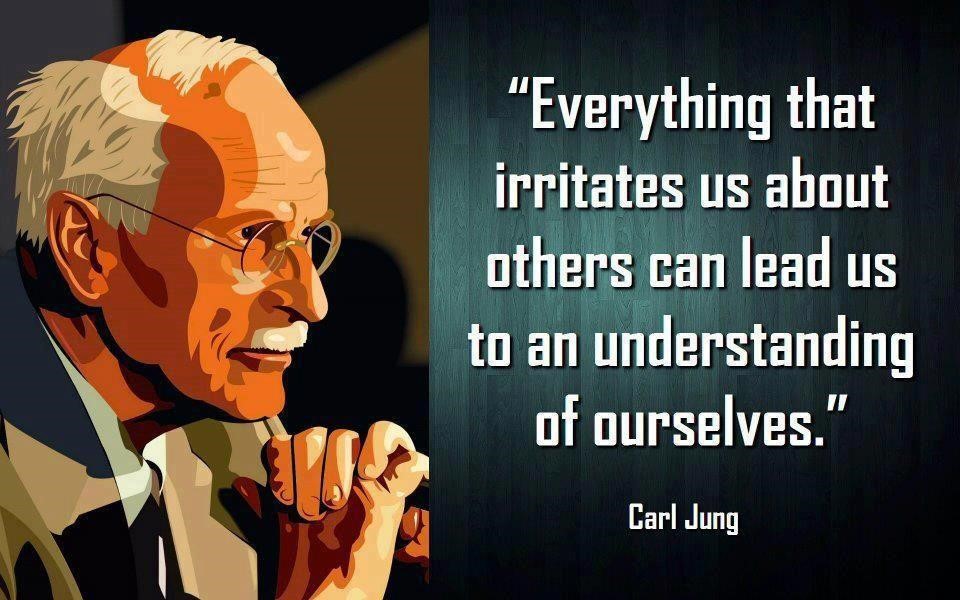
If the key to shadow work is self-reflection, then projection could be thought of as the process of seeing our own traits reflected back at us by the external world. It can be seen as the conscious mind’s attempt to reject the aspects of ourselves it deems unacceptable—or, conversely, as the shadow’s desperate attempt to be acknowledged.
Consider the following example of projection at work:
“Kenneth maintains a staunch stance against religion, dismissing it as primitive and unhelpful. To him, it’s merely a collection of stories that tie the believer’s identity to imagined characters from the past. But below the surface, His past self—frozen in time—holds more power over him than his present identity. By philosophizing through this immaterial past self, and doing so based on the story he repeats to himself religiously, he becomes triggered by religious individuals, as he subconsciously sees his struggle in them.”
Here’s another example:
“Melissa prides herself on being independent, strong-willed, and highly self-sufficient. She has little patience for people who, in her eyes, are overly emotional or needy. When friends come to her for support, she often brushes them off, telling them to ‘toughen up’ or ‘figure it out.’ But beneath her hardened exterior, Melissa harbors deep-seated fears of vulnerability. As a child, she learned that expressing sadness or seeking comfort led to rejection, so she buried those parts of herself. Now, when she sees others openly seeking connection and support, she reacts with irritation—not because of their behavior, but because their vulnerability mirrors the parts of herself she refuses to acknowledge.”
These instances of projection could be thought of as messages from the deeper mind, or even a case of the mind being at war with itself. But projection isn’t always about seeing traits we dislike in ourselves. In some cases, we can project traits that we do like, but can’t acknowledge are within us.
The Golden Shadow: Seeing Our Own Worth in Others
For many people, their own passions, talents, and strengths have been constrained by their environment. While they can’t acknowledge these traits in themselves, they’re still perceptive of them on some level, and therefore see them in others.
This phenomenon is known as projecting the golden shadow. Here are some examples:
“David has always admired artists, particularly musicians. He follows countless bands, dissecting their lyrics and compositions with deep passion. He often tells his friends, ‘I could never do what they do. Some people are just born talented.’ However, what David fails to realize is that his admiration stems from something within himself—his own unexpressed creativity. As a child, he loved writing poetry and experimenting with instruments, but discouragement and self-doubt led him to bury that part of himself. Now, when he sees musicians performing, he projects his lost potential onto them, believing that artistry is something exclusive to others rather than an ability he, too, could cultivate.”
Here’s another example:
“Mary-Anne was an entrepreneurial spirit from a young age. She had a newspaper route at 8, then ran a business selling custom-made stamps at 11. But the adults in her life, rather than nurturing this ambition, often responded with dismissive criticism—perhaps driven by their own unrealized dreams. Over time, Mary-Anne internalized this negativity, mistaking it for an objective assessment of her abilities. Now, as an adult, she passionately encourages others to pursue entrepreneurship, not realizing that the drive she admires in them is actually a reflection of the ambition she long ago buried within herself.”
As we can see, shadow projection isn’t always about seeing the traits we dislike about ourselves. Sometimes it can be about catching a glimpse of the glimmering golden gifts we’ve lost. But in both cases, the goal is the same—to reclaim these parts of ourselves and enjoy a fuller, freer life.
Integrating the Shadow: The Road to Psychological Balance
Once a person has observed their shadow and acknowledged a part of themselves that was previously hidden, the next question arises: what is a person to do with their newly discovered darkness?
The answer is integration. Jung emphasized that the shadow is not a negative concept or an enemy to be defeated. Instead, it was a part of ourselves we needed to understand, so we could prevent it from having a negative impact on our lives. In some cases, we can even use it to our advantage.
Jung called this process individuation, which could be thought of as simply “becoming who you are.” Rather than denying our past, ignoring our triggers, and limiting our potential, individuation encourages us to embrace the totality of mind, and use our darkness to guide as just as the light does.
Let’s refer to some of our earlier examples to see how shadow integration might look.
Kenneth: Kenneth’s anti-religious stance may reveal that he’s been too focused on his past story, and should instead be more present in the moment. The revelation as to why he did this may even help him maintain a more compassionate stance toward those with different beliefs, even he disagrees.
Melissa: Melissa’s coldness toward herself and others regarding emotional sensitivity could be addressed slowly and gently, through self-care or counseling. This could encourage her to be more sensitive to her friends, proving that emotions don’t equate to vulnerability, but rather promote empathy.
David: David’s magnetism toward music may encourage him to pick up an instrument as a hobbyist, or even take part in recordings or live shows. Rather than lamenting he can’t be like the musicians he admires, he might ask them for advice, or approach them about a collaboration.
Mary-Anne: Mary-Anne’s encouragement of others could be turned inward to nurture her own inner businesswoman. She could take up a side hustle to rediscover her love for entrepreneurship. In realizing she was always talented, she may also gain a better understanding of the ones who criticized her.
Integrating the shadow constitutes a form of balance, where opposites are integrated. A psyche that was once at war with itself and others is now in harmony, with light and dark coexisting together just as they do in the physical world.
Jungian Symbolism in Nature, Science, Culture, and Myth
Jung’s concept of exploring the psyche, discovering the shadow, and integrating the opposites is a recurring theme not just in psychology, but in nature.
Jung often referred to the metaphor of the acorn becoming the oak tree to illustrate the potential inherent within every individual. Individuation could be thought of as the human psyche, spirit, soul, or consciousness desiring to do what a seed desires to do in order to become a tree.
Much like the acorn contains the blueprint for the majestic oak tree, each of us carries within us the potential for growth, transformation, and maturity. While it draws from the external environment, the growth comes from inward, much like psychological maturity can only come from introspection.

The psyche, like the tree, is comprised of a duality. The part we see produces life and nurtures other living beings. The part we don’t is rooted beneath the surface, sprawling as far as its visible counterpart, with foundations laid in the cold dirt. Yet it’s this apparent contradiction that sustains this living organism. Just as the tree draws from the dirt and manure of the ground to produce fruit and vegetation, the psyche can draw from the triggers and fears it’s rooted in to produce self-awareness and empathy.
This also ties into the popular Latin phrase used widely in Jungian psychology: “In sterquiliniis invenitur” This translates to, “in the filth you will find it.” It implies that, oftentimes, our fears, triggers, and undesirable aspects contain the potential to accelerate our growth.
The Concept of Alchemy: Transformation and Integration
Jung was fascinated with myth, lore, and fantasy, largely because he saw these ideas reflecting the nature of the human psyche. It’s one reason that magical concepts and fantasy stories resonate so deeply on an individual and cultural level.
Take the concept of alchemy. Just saying the word conjures to mind images of the wizard or mad sorcerer at his laboratory, mixing chemicals to create impossible results, transforming lead into gold, and fashioning life-saving elixirs using foreign ingredients—and of course, a touch of magic.
In the realm of psychology, Jung often referred to shadow integration and individuation as a form of psychological alchemy. By combining our conscious awareness and personal strengths with a measured dose of introspection, we can create something of extraordinary value in a way that once seemed impossible.
This idea of transformation can even be seen in modern medicine. While a particular substance might be toxic in large doses, when combined with other ingredients in precise amounts, it can become a life-saving remedy. Similarly, our past traumas—though they may seem too painful or overwhelming to face—can be used in small doses, blended with our wisdom and emotional growth, to create a psyche capable of overcoming adversity.
Facing the Dragon: A Vital Part of the Hero’s Story
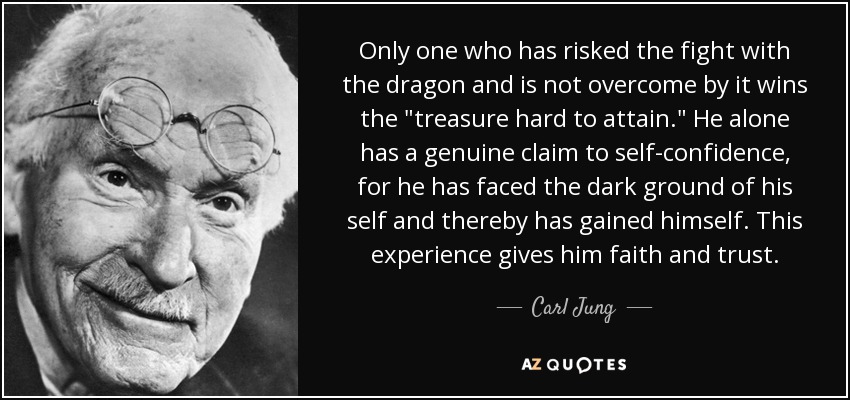
In Jungian psychology, the dragon represents a powerful symbol of the darker, unacknowledged aspects of the psyche. Throughout history, dragons have appeared in myths and stories across cultures, as a force to be reckoned with. Whether the dragon is guarding treasure or terrorizing a village, it is a fearful, dangerous entity the hero must confront.
Jung saw the dragon as a symbol of the vast unconscious forces one must confront in the journey of individuation. However, unlike the Western myth of slaying dragons, Jungian thought suggests that the shadow is not an enemy to be destroyed, but a force to be understood. The true challenge is not to conquer it, but to face it without being overcome.
In Eastern cultures, dragons are typically seen as wise, powerful beings that offer guidance and wealth. The dragon in these traditions represents a positive force of transformation, suggesting that the dragon, when understood and integrated, brings personal growth, wisdom, and spiritual enlightenment.
Facing the dragon, as dangerous and threatening as it may seem, represents the opportunity for transformation. It can restore peace to your inner kingdom, provide a pathway to a treasure that was once heavily guarded, and most importantly, help you step into your fullest potential.
Shadow Work: The Path to Self Discovery, Inner Healing, and Personal Growth
What if it turned out all along that the darkness in the back of your mind wasn’t a curse—but a messenger?
This dark side isn’t dark as in evil, but dark as in hidden. And the urgings you felt from it in the form of instinctive reactions and negative emotions weren’t attempts to hurt you. They were gentle urgings, or depending on their intensity, desperate pleas, to be noticed.
The person who is conscious of their own past, triggers, and instincts has unlocked the key to stop their mind from operating from this shadowy state of autopilot. Instead, they move forward with their path illuminated. The shadow is the key to your true self. Finding it doesn’t mean becoming a “better” you, but rather being a more complete you.
Carl Jung’s massive contributions to psychology have influenced millions. But not even he can give a person the gift of individuation. While he and others can lead us to it, we alone must make the journey inward. As Jung himself famously put it: “Who looks outside, dreams. Who looks inside, awakes.”
Looking for more content on Carl Jung, shadow work, psychology, personal development, or spirituality? Contact me today! Not only do I have a passion for these topics, but I also bring a decade of copywriting and content marketing experience.